
Table of Contents
Welcome to our column about everything wild: in the city, in our parks and recreation areas, in suburban gardens, on farms, at zoos, you name it. Our focus will mostly be north of Boston, but if we travel, we will bring you on that journey, too.
We’re kicking things off with a look at pollinators, many of which are still very active at this time of year. It seems counterintuitive, since temperatures drop in the fall, but many species of bee, wasp, and fly are working away through October.
Some, such as yellow jackets, might be a bit more aggressive right now because there are fewer flowers, which means they have less food to sustain them. But, most pollinators are harmless.
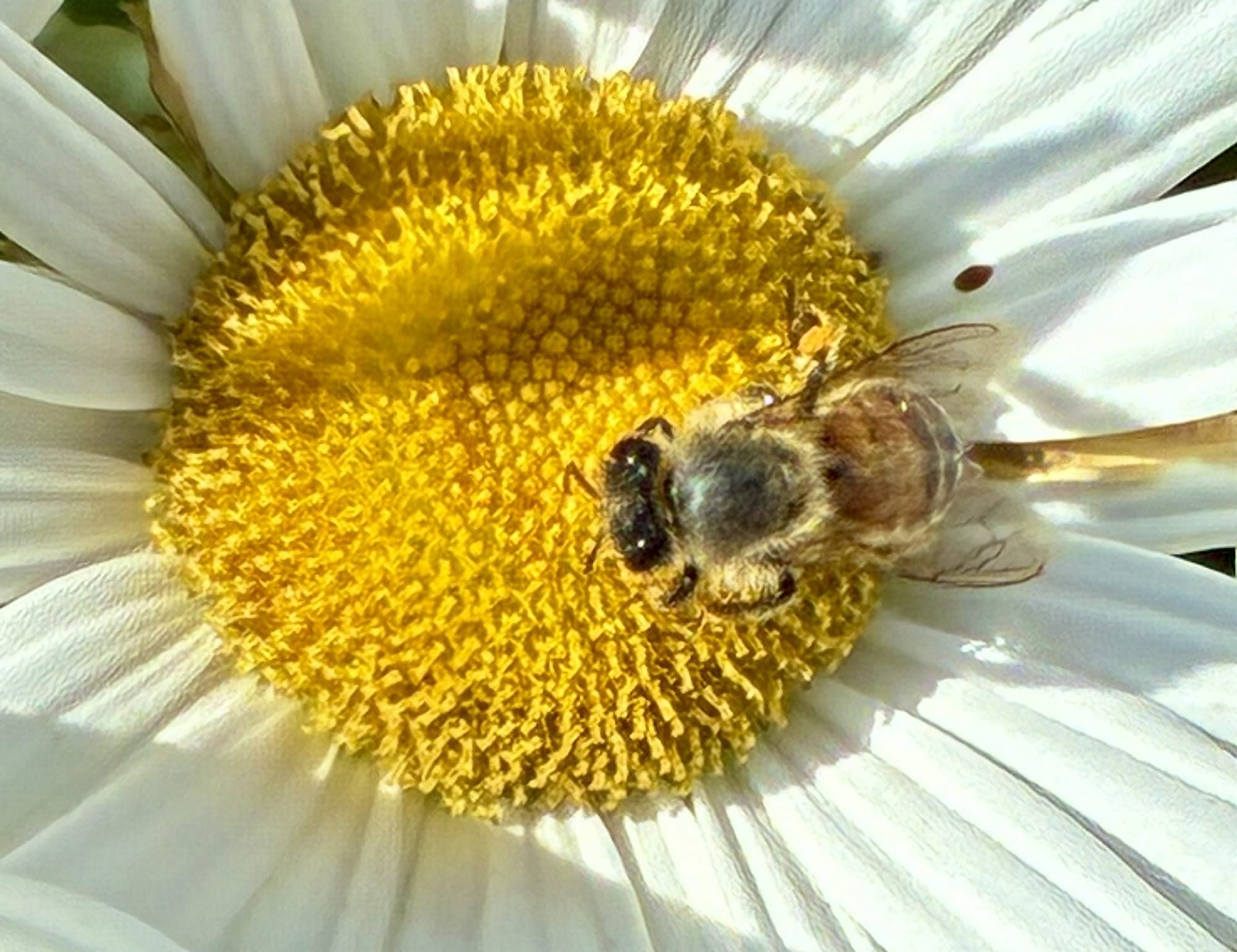
We were out looking for pollinators in several communities north of Boston in mid-October, and we found a Montauk daisy in Marblehead that was abuzz with many different species. We only had an iPhone with us, but we stood there filming and talking for a minute. The pollinators ignored us and just went about their business.
One of our favorites is the bumble bee. Unless you step right on a nest, and even then, they’re unlikely to sting you. And, aren’t they funny how they fly? They kind of meander about, seemingly defying the laws of gravity with their little wings and big bodies.
A bumble bee on a daisy. GOTTA KNOW MEDFORD VIDEO/WENDALL WATERS
Among the most aggressive are the bald-face hornets, which look like yellow jackets but have white markings instead of yellow, and they tend to build their nests in different places. Yellow jackets often nest in the ground or behind the siding on buildings, and sometimes they make a round, paper nest in other protected spots. Bald-face hornets build big, ornate paper nests in shrubs and under the eaves of houses.
Both will aggressively defend their nests, so be careful if you are planning to trim shrubs or cut back perennials.
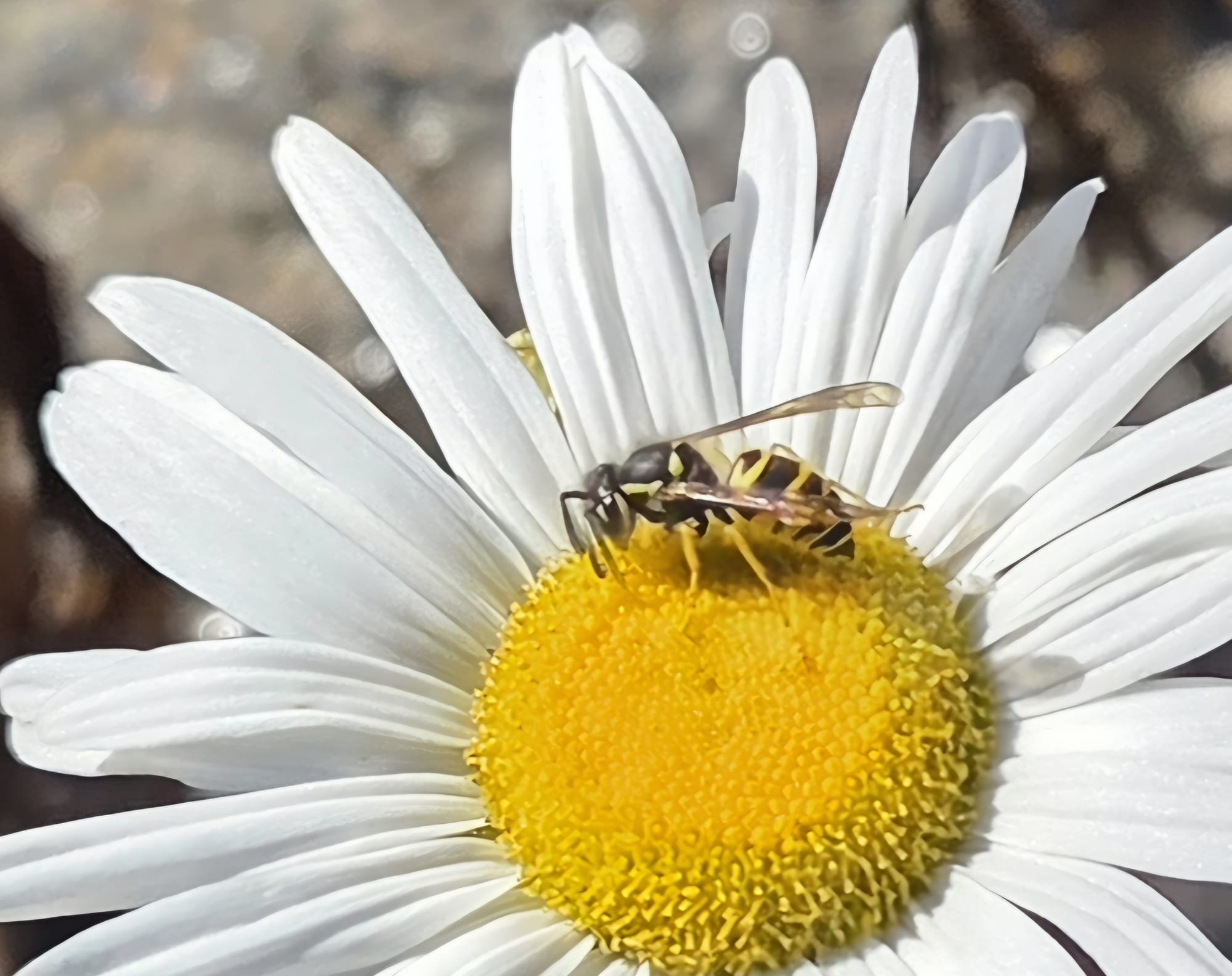
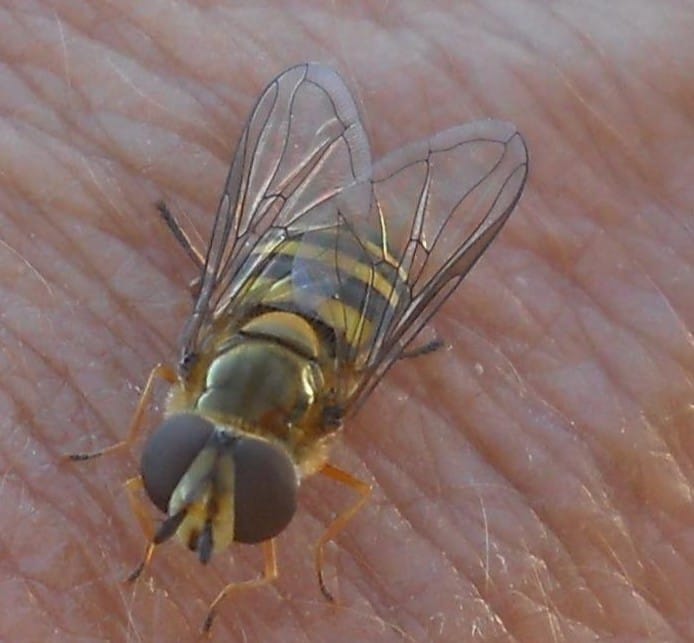
Many types of flies are also important pollinators. Hover flies, so-named because they can hover like a helicopter, are easily mistaken for bees. They often have markings that are similar to those of bees, but if you look closely, you will see that they have only two wings. Bees have four wings.
For that, and many other reasons, it can be difficult to identify insects. Oftentimes, we’ll get to the general grouping, but not to the particular species. In the case of the hover flies, there are many different species.
Although you are unlikely to see them this late in October, we’ve included a photo of one here so you can see how closely they can resemble a bee.
Regardless, watching pollinators can be fun, and you can do it anywhere. You don’t need a yard or even a big garden. People who live in areas where there are small yards or no yards at all plant flowers and grow tiny gardens wherever they can, in window boxes, in a pot on the stairs, on top of rock walls, on roof patios. If there are flowers, there will likely be pollinators.
Here are more photos and some video:
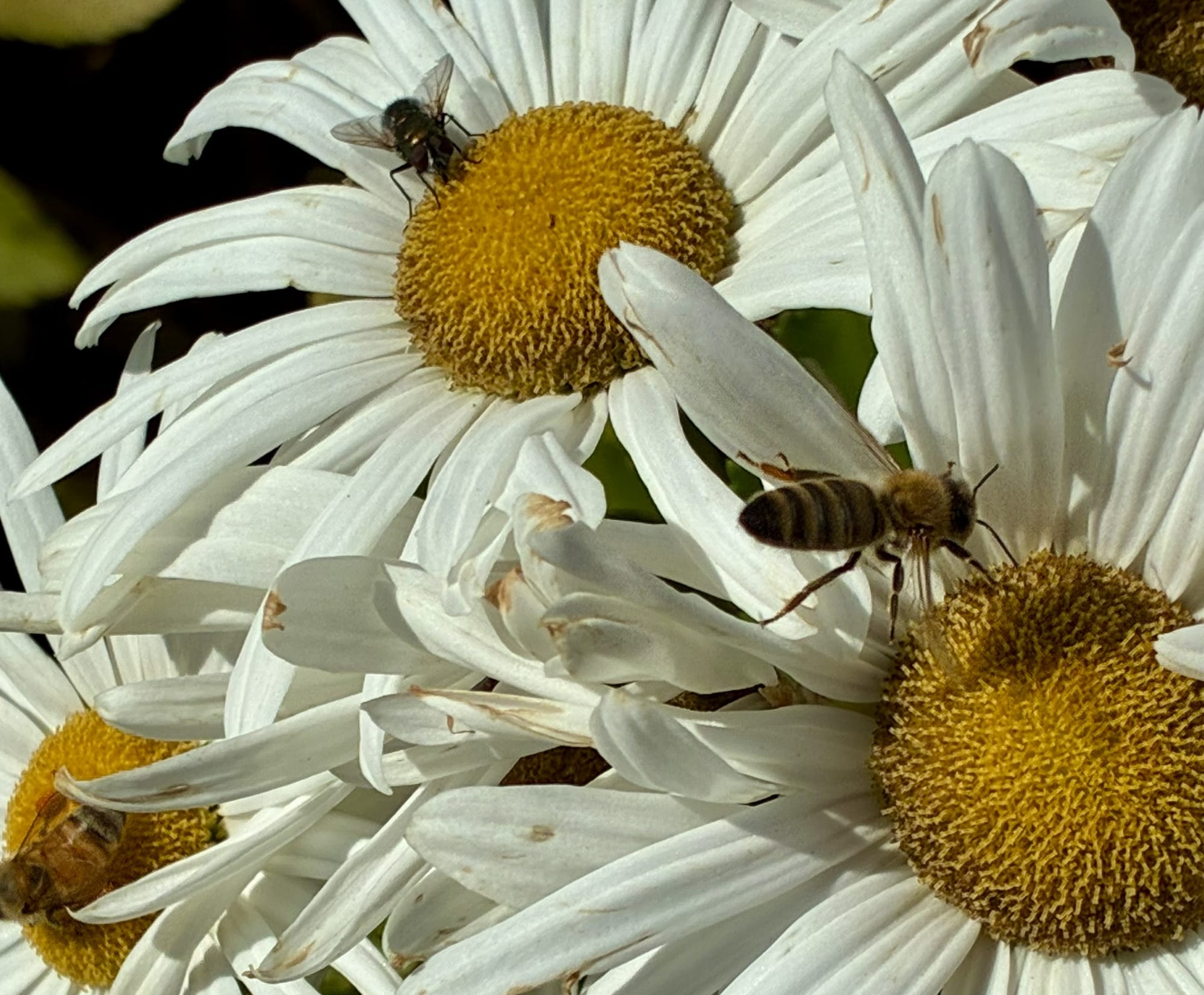
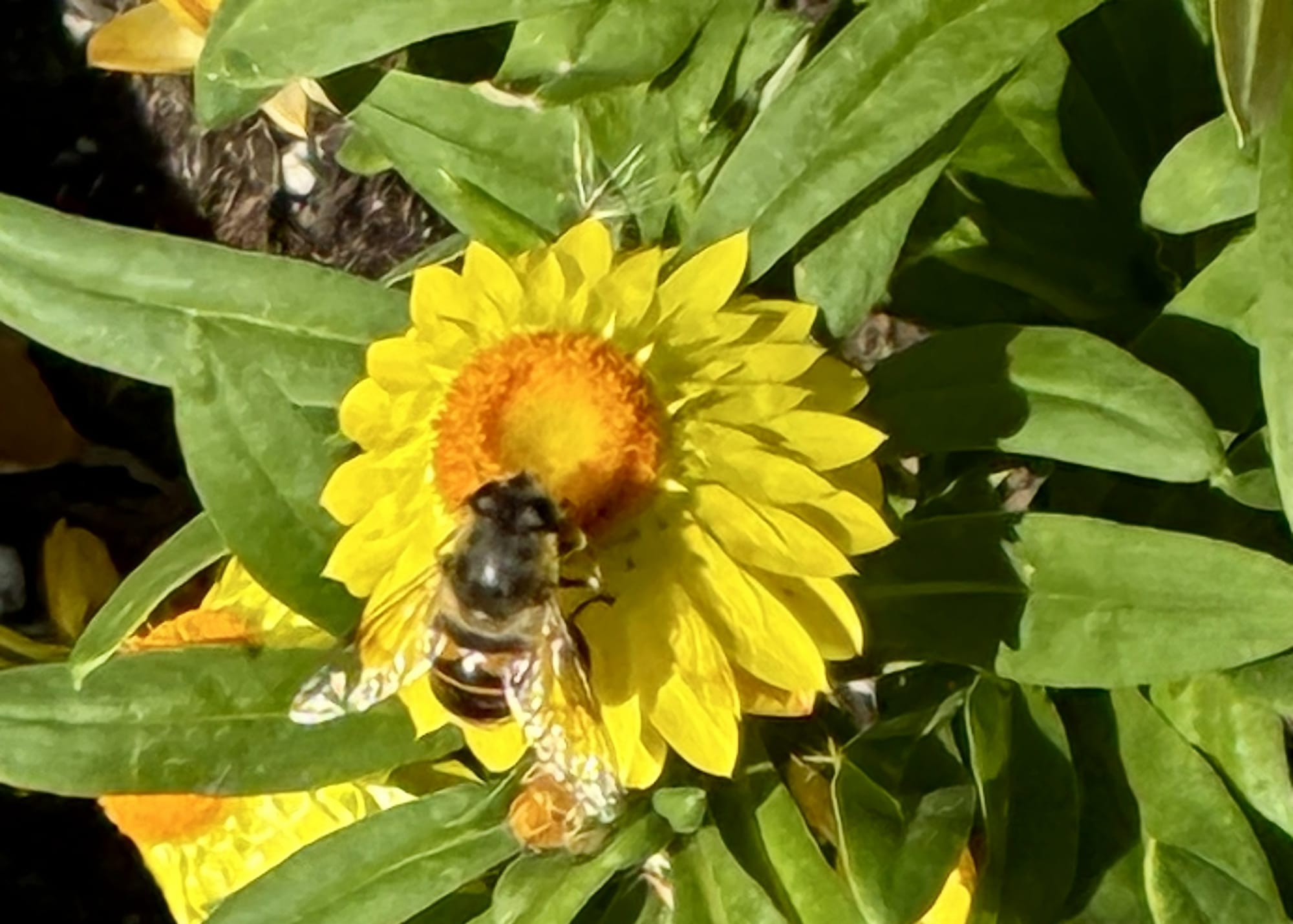
GOTTA KNOW MEDFORD STAFF PHOTOS/CHRIS STEVENS
GOTTA KNOW MEDFORD VIDEO/CHRIS STEVENS
Wendall Waters works part-time in landscaping and loves photographing bugs. Chris Stevens is an avid gardener and is always up for a new adventure.