


Table of Contents
The bad news is taxes are on the rise again in Medford. The good news is it’s $25 less than last year's increase.
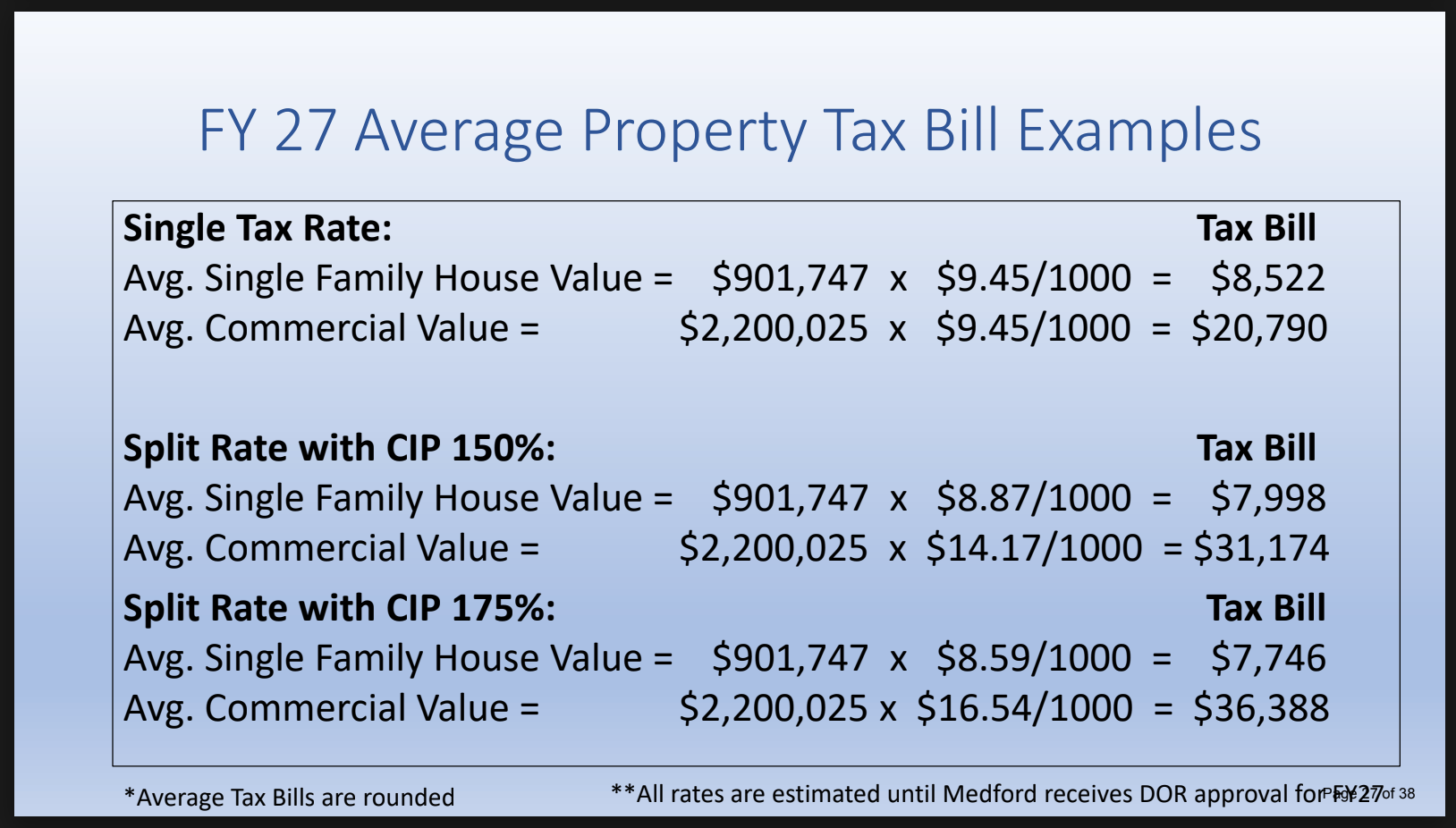
The average family tax bill, based on an average single-family home valued at $901,747, will increase $319 in FY27. That is a 4.3% increase over last year, according to Chief Assessor Jared Yagjian’s presentation.
Yagjian gave his annual presentation to City Council during its Tuesday, Nov. 17, meeting, and the council subsequently voted for a tax factor of 0.908635. The tax rates will be set at $8.59/$1,000 for residential and $16.54/$1,000 for commercial/industrial/personal property (CIP).
It could have been worse, Yagjian said. If the council had gone with a flat tax rate for both residential and commercial, the average family tax bill would jump to just over $8,500, and had they gone with a smaller CIP shift the average residential tax bill would have hovered at just under $8,000. But by going with the maximum shift allowable by law, Yagjian said, the average residential tax bill will be closer to $7,700.
As it was with last year’s tax hearing, however, the real discussion did not focus on the tax increase, it focused more on whether the city should have a residential tax exemption. According to Boston.gov, a residential exemption is a local tax option that if enacted “reduces your tax bill by excluding a portion of your residential property’s value from taxation.”
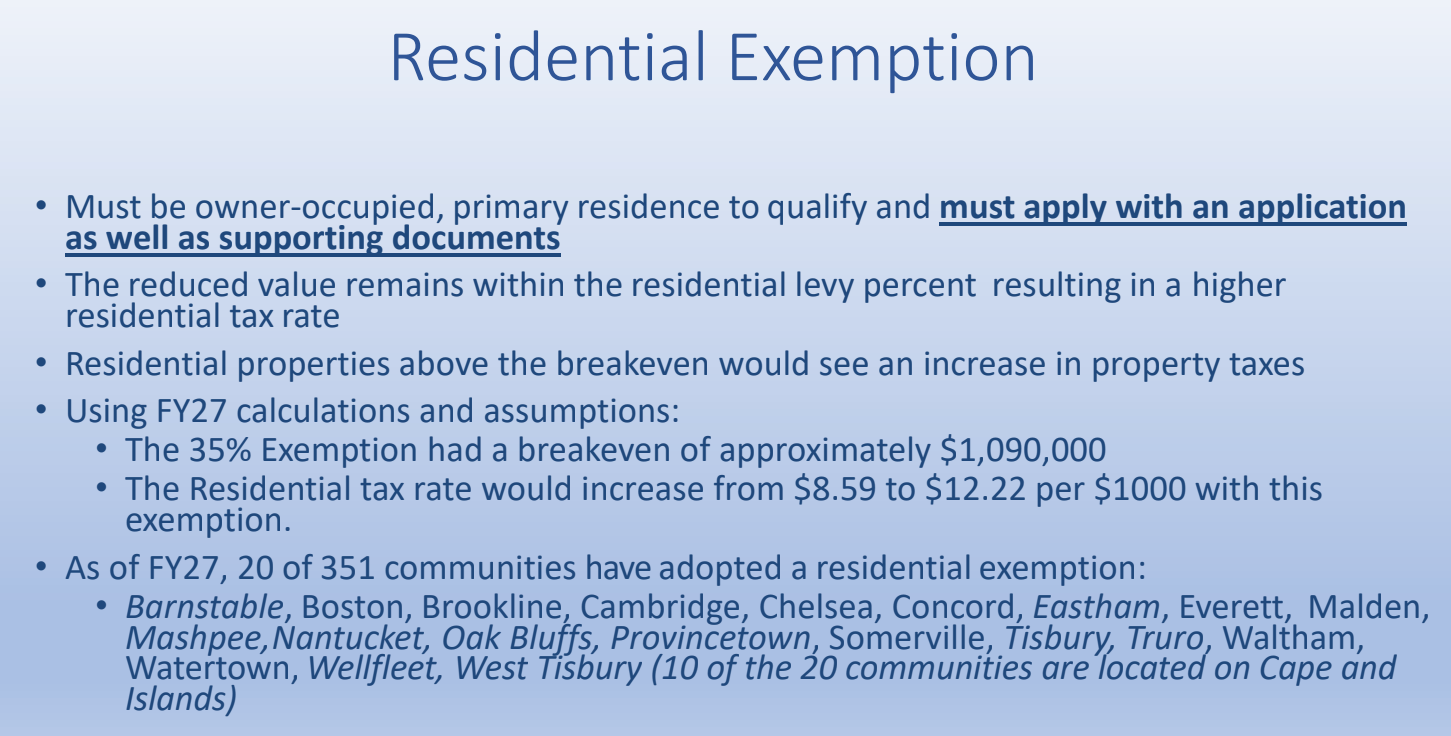
Once again Councilor Anna Callahan was frustrated that the residential tax exemption was not on the table.
But Yagjian said he compared Medford to other communities that use the residential tax exemption and determined the time to enact it isn’t yet right. He called the exemption a zero sum game.
“No monies get exempted from the levy, it’s a valuation exemption,” he said.
Yagjian said the relief that some residents would feel merely gets pushed onto the larger properties, as in the largest apartment building located across the street from Wegmans. If they enacted the exemption, that one building would be hit with roughly a $500,000 “tax shock,” but if they waited a few years, for the three large apartment buildings currently in the pipeline to be completed, the impact would be dispersed over a greater area lessening the shock for any one property, Yagjian explained. Although it’s an oft debated topic, Yagjian is concerned that any tax increase on the larger apartment building would result in increased rent, so waiting would make it easier on renters.
Callahan said she doesn’t believe that’s true.
“I think the reality is that people who don’t live here and are purely buying for investment and profit purposes, they charge the highest rents they can, they charge what the market can bear,” she said. “The market is not going to bear more simply because their taxes go up.”
She said she believes there are a number of reasons why the time is right for the city to enact the exemption, and hitting absentee landlords in the one place where it might make a difference – the wallet – is one.
Over the years of canvassing neighborhoods, Callahan said, she has heard a lot of complaints regarding absentee landlords. She believes that if they can make it a little pricier for investors set on buying up property for housing while not actually living here, then they should.
She also argued that houses that are in a family trust could also benefit from the exemption. A quick calculation shows that more homes would be below the break point, some 14,000 versus roughly 2,000 that would be above the break point and therefore pay higher taxes, she said.
“It really seems like this is going to be a great benefit to the vast majority of people who live in Medford and that the people who will be paying more are people who do not live in Medford,” she said. “That is the way it’s designed to be … so, I plan on voting yes.”
And if it fails, which it did in a 5-2 vote, with Councilor Matt Leming siding with Callahan, Callahan said she hoped that it would at least encourage the administration to actually prepare for the question to come up again next year.
Yagjian also pointed out that enacting the exemption would be "massively burdensome” to his office with only three employees. In the time it took Callahan to explain how one deed might benefit by the exemption, if the house were in a trust and if the trustees lived in the home or if the children were the trustees and the parents lived in the home, he said, “we’d have to do that 14,000 times over.”
Resident Paul Gerety said he hoped the council would take into account that there is a lot going on in this city financially, including a “looming” upcoming vote on a debt exclusion to build a new high school. He said he certainly hoped councilors would consider what kind of tax impact that might have on seniors on fixed incomes.
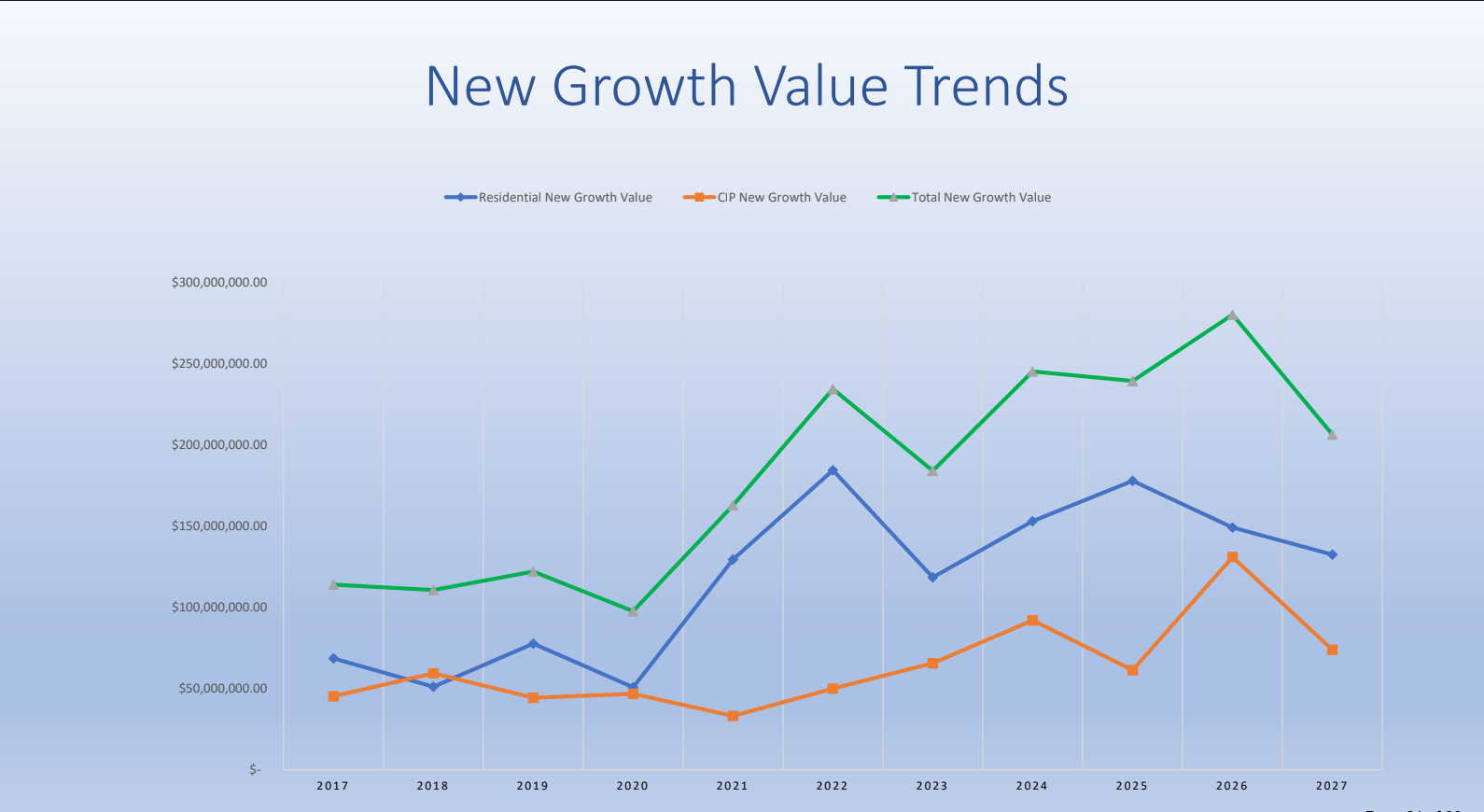
“It further underscores the issue that the council and the mayor and the whole city should really be looking at economic growth,” he said.
Councilor George Scarpelli also took a moment to praise Yagjian for his unwavering professionalism, stoicism and expertise.
“You’ve educated me enough over the last few years that I’m confident in the choices that we’re making and the way you are leading us and guiding us,” he said. “I just wanted to make sure you knew because too often we don’t say it.”