Table of Contents
Lakota YouthStay also gives host families an opportunity to learn about life at Pine Ridge
By Crystal Yormick
Nine children from the Pine Ridge Reservation, which is home to the Oglala Lakota Nation, spent a little over a week with host families in the Medford area during the annual Lakota YouthStay program.
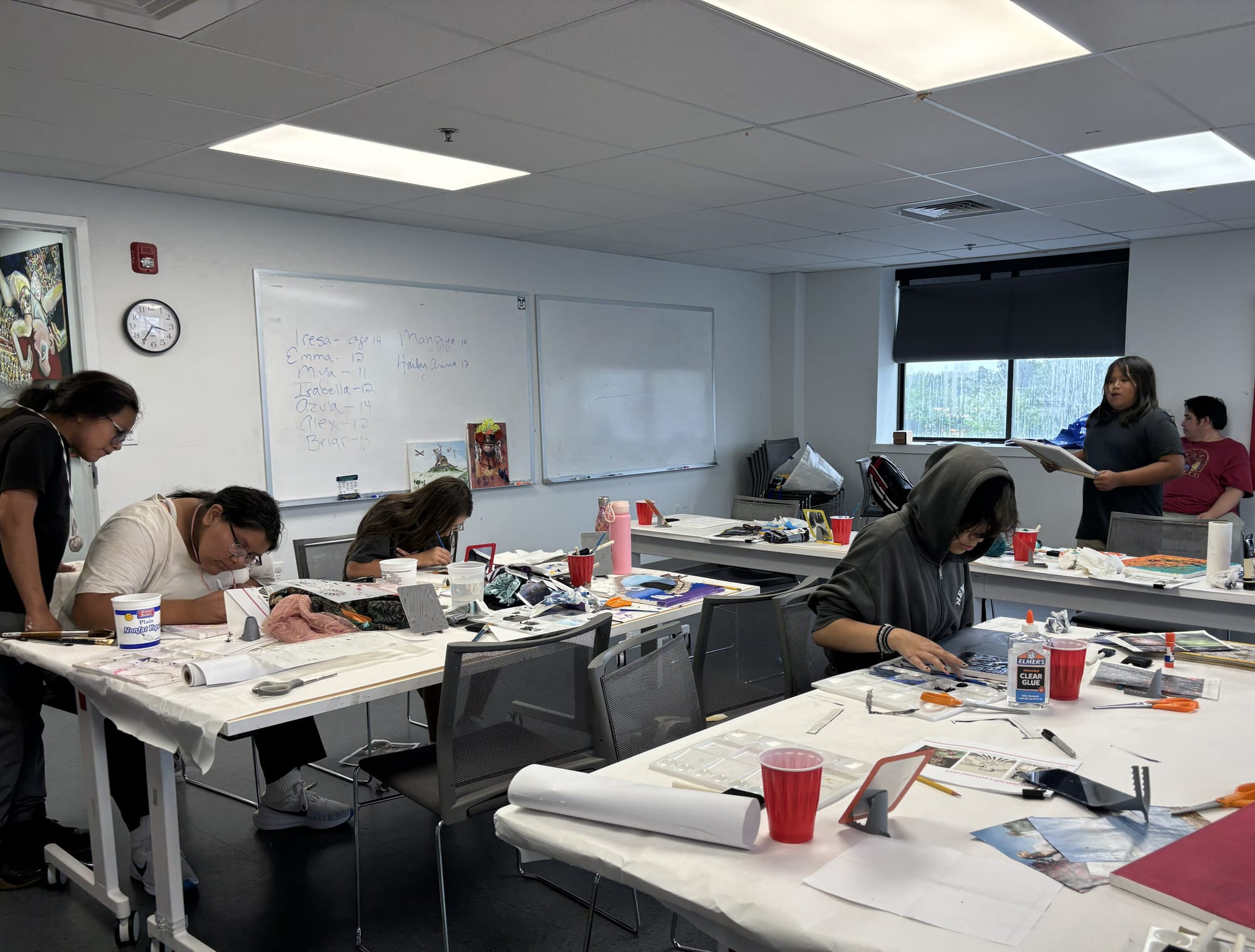
The Lakota YouthStay experience enables the kids, whose ages range from 10 to 14, to explore the Boston area from Fenway Park to Spectacle Island. This year, the program ran from June 30 to July 9 and the kids indulged in New England delicacies like lobster and fried clams, counted the amount of Dunkin’ Donuts they saw, and participated in art and photography workshops. They also visited Tufts University, the Boston Museum of Science, and the New England Aquarium.
Medford resident Joy Harris, who is founder and director of the program, said the trip is a way for kids from the reservation to learn about life in Massachusetts while host families simultaneously learn about life at Pine Ridge.
“A lot of the kids are pretty open about what their life is like on the reservation,” Harris said. “So, it’s good for the host families, and it’s good for the kids.”
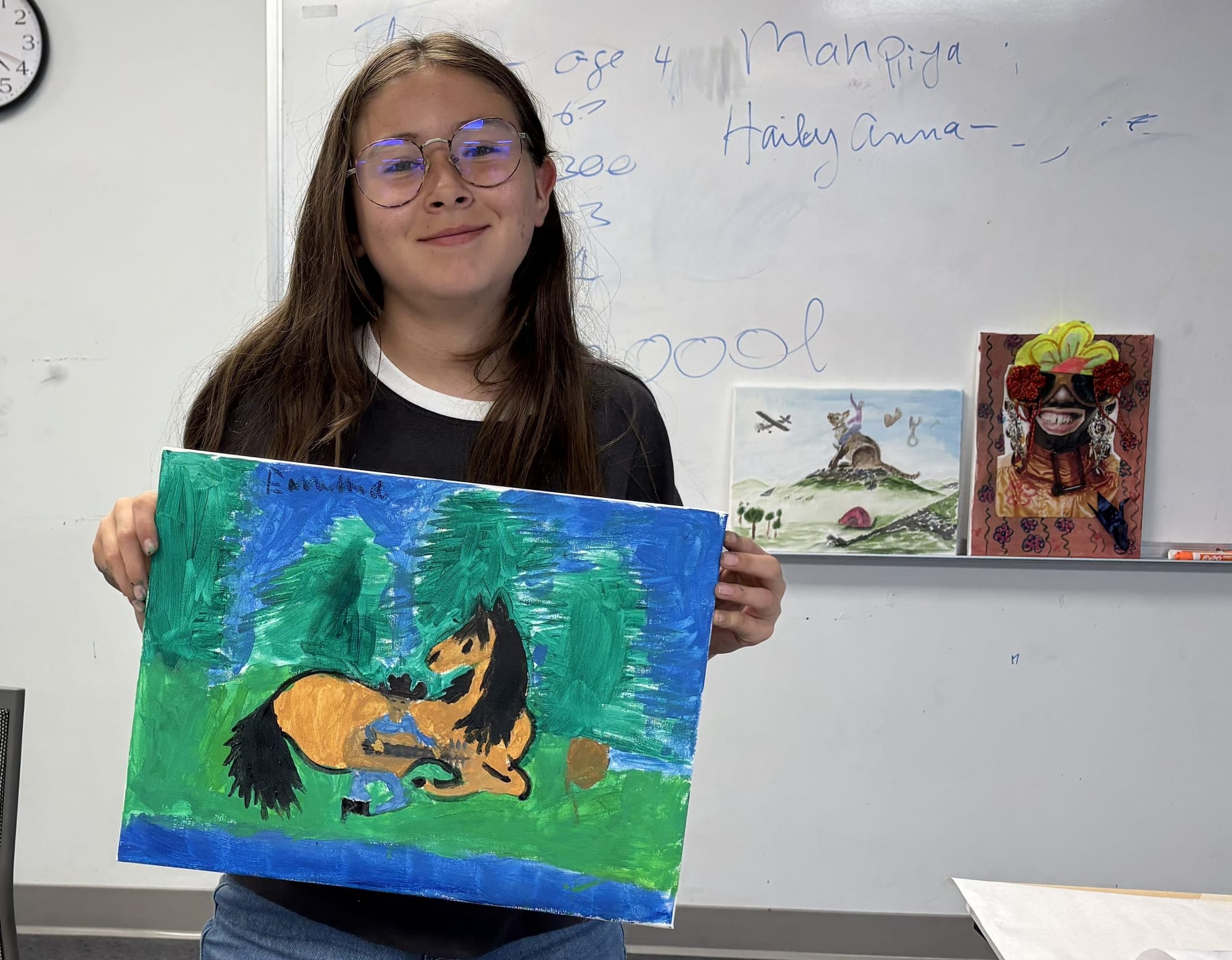
Each year, she bases activities on the participants’ interests, hence this year’s art workshop where students created self-portraits. Many of the kids said seeing the ocean and swimming in it was their favorite activity.
“The consensus, more than anything, is that they’ve enjoyed it,” said Olen Zephier, an eighth-grade English language arts teacher at Wolf Creek School on the reservation. “They’ve enjoyed being in the big city and experiencing big city life, doing big city things.”
Oglala Lakota County within Pine Ridge Reservation has been ranked as the “poorest” county in the nation and ranked last for health outcomes and factors in South Dakota, according to Re-member, a non-profit that works with the Oglala Lakota Nation. It also has some of the highest rates of violence, unemployment, drug use and alcoholism in the country.
Despite these hard numbers, many kids spoke about how they missed home, and while they enjoyed themselves during the trip, they are excited to get home to relax, be in their own beds, and get back to their normal schedules. They’ll miss their host families and views of the city, they said.
“It’s nice to be away from the violence,” said 12-year-old Emma Gibbons, who participated in the program. “We’re enjoying our time before we go back.”
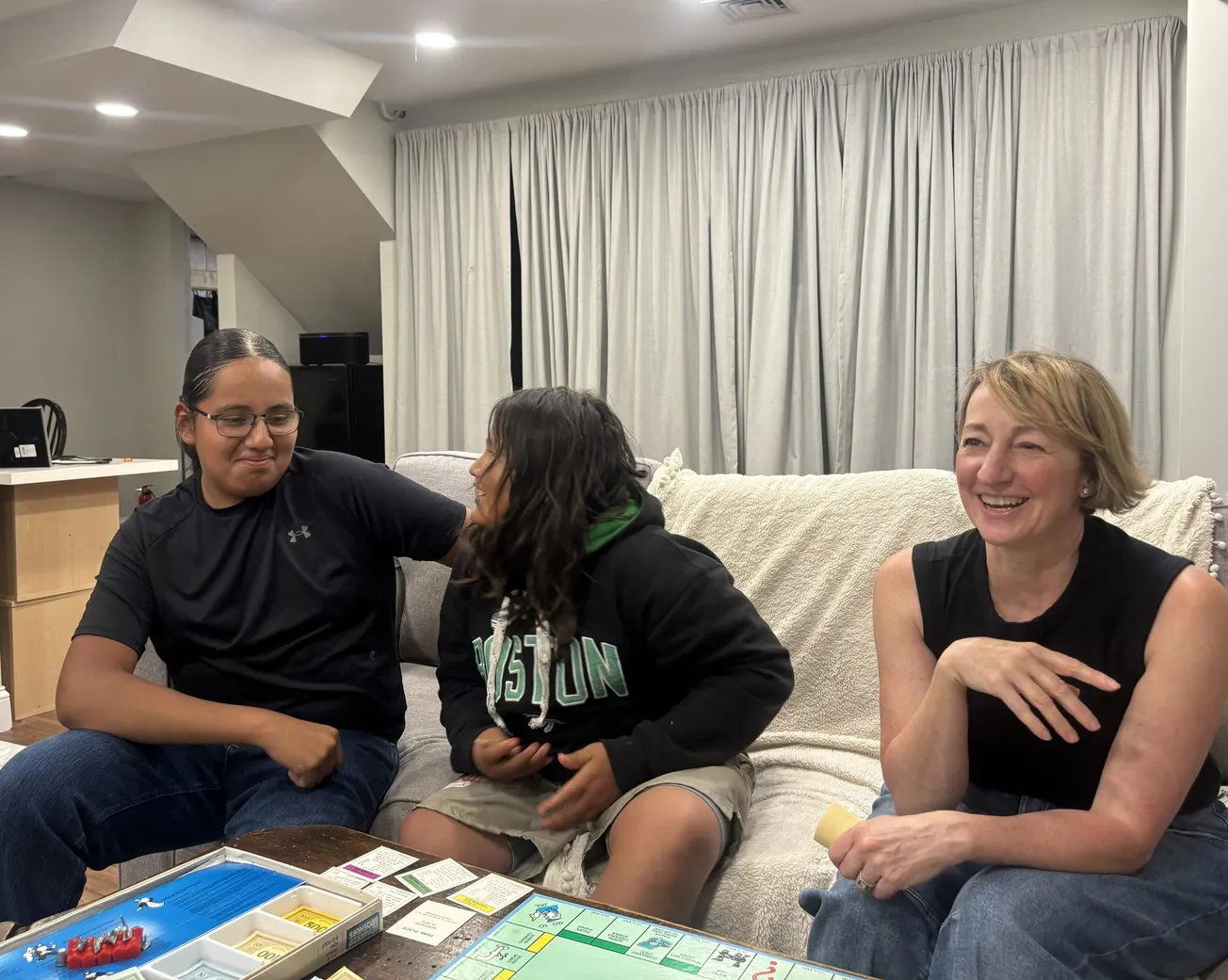
Anita Colasante and her husband hosted three boys from the program and said the kids are “very pragmatic.” They’re surrounded by a huge community on the reservation, but that isn’t as prevalent in the northeast, she said.
“There was a lot of emphasis on just how hard the life is, but looking at it through their eyes, they don’t view it that way,” Colasante said. “It’s just their life. It’s just what they do.”
For kids that might want to make the leap to come to a different part of the country at some point in their lives, host families can serve as a point of contact a few years down the line, she added.
Creating the program
The YouthStay experience came about after Harris traveled to the reservation with her husband and a group of people from their church in 2012 to build projects on the reservation requested by the Lakota people through Re-Member.
“We learned so much about Lakota history and about the culture, and we just loved the people that we met out there,” Harris said. “When we came back, it was like the world looked different to us.”
From there, they began building relationships with Natives living on the reservation. After a string of teen suicides on the reservation in 2015, Harris said she spoke with a group of young people there about the youth programs and summer programming that existed, and there wasn’t much at the time, she said. Then, they began speaking about student exchange programs.
“The kids got really excited about that,” Harris said. “They were like, ‘Oh, we would love to go somewhere and see something off the reservation.”
In 2016, she returned to the reservation, which is roughly the size of Connecticut, to conduct community meetings in each of the nine districts to introduce the program and build trust among families who might want to participate. The first group of kids came to Massachusetts in 2017.
To get involved, both program participants and host families complete an application. The kids fill out a personal statement and get recommendations from their teachers, and there is a background check process for hosts. This year, the program hosted nine children and received 15 applications. The program costs about $2,000 for each participant, Harris said. Funding comes from grants, fundraisers and individual donations.
Harris said her dream for the program is for a Native person to take over the program and “take it in whatever direction they would like” and expand it to other communities. While she runs it as a volunteer, she hopes her role can one day become a paid job for someone on the reservation.
“There’s five reservations in South Dakota, so if the person could dream big, they could actually bring this to the other four reservations,” Harris said.
For now, she plans to continue running the program as a volunteer.
Zephier said the “old adage” back home is to get an education and then return to the reservation to use it and help your people. However, his personal philosophy is to make a difference in whatever community the kids live in, even if that’s not the reservation. He said he wants the kids to realize there is a world out there for them to explore after this experience.
“Just the fact that they’ve been able to get just a small facet of that, I’m hoping that it intrigues their curiosity about the country even more,” Zephier said. “Anywhere they want to go, they can set their mind to it.”